
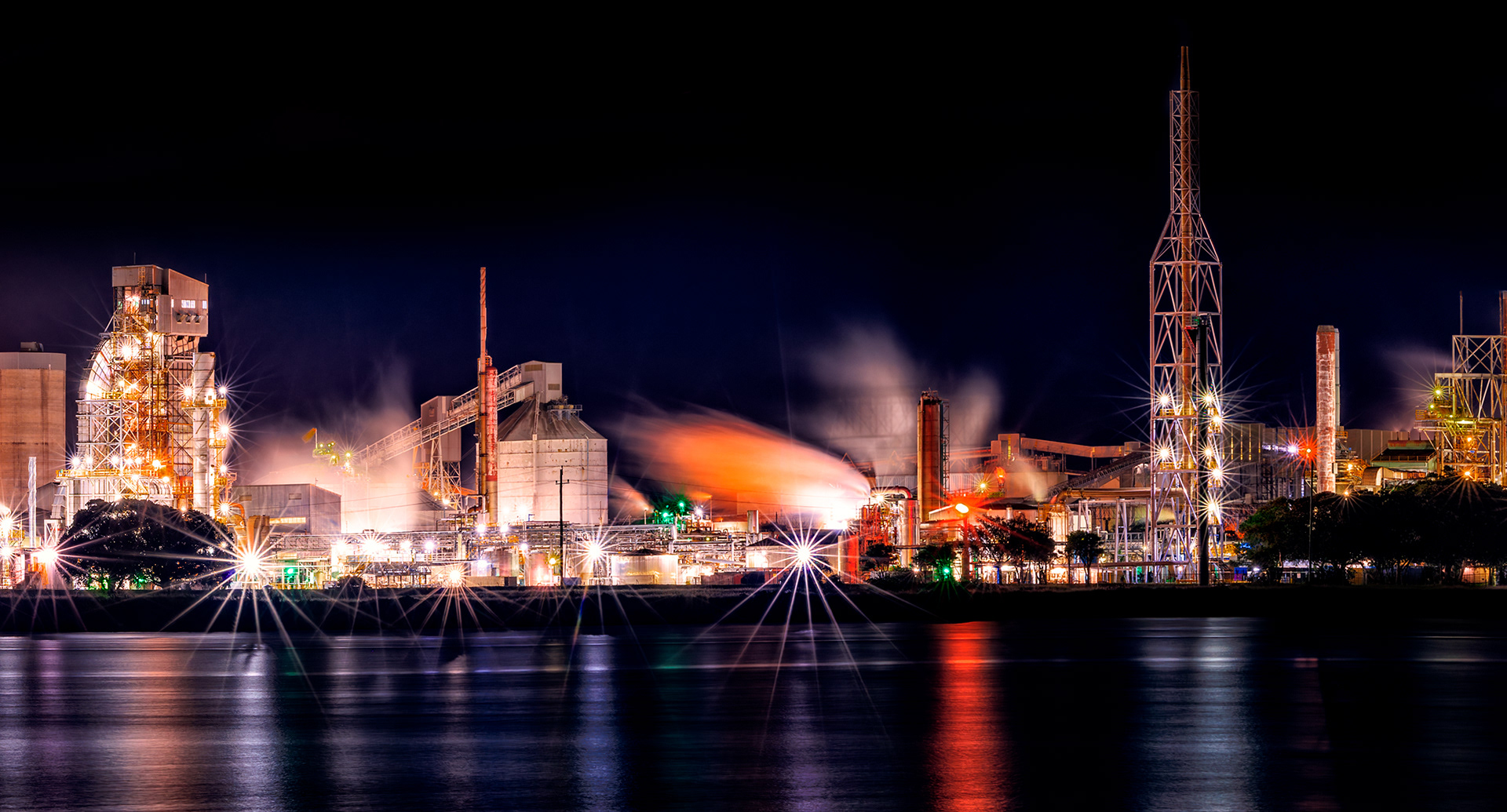
Why night photography?
Photography is often described as painting with light — but after the sun sets, that light becomes more elusive. Familiar scenes transform under moonlight, starlight, or distant town lights. Colours shift, shadows deepen; but what feels intimidating at first becomes one of the most rewarding genres to explore.
In Australia, winter marks Milky Way season (May–September). The Galactic Core rises high, drawing photographers inland to escape coastal light pollution. While new moons provide the darkest skies, moonlit landscapes have their own charm, revealing textures and naturally lighting foregrounds. Low-level lighting or light painting adds creative control. Winter festivals, like Vivid in Sydney, also transform cityscapes after dark.
This article covers the core styles of night photography — Milky Way, star trails, urban scenes, and the Southern Aurora — along with gear, apps, camera settings, and practical tips to navigate common challenges.
The essentials: Gear that makes night photography easier
These essentials will keep your camera steady, your shots sharp, and you comfortable during long nights under the stars.
1. Camera and lenses
— Full-frame camera for low-light performance and minimal noise
— I use a Mirrorless Canon R6 Mii and used a DSLR Canon 6D previously
— Wide-angle lens with fast f/2.8 aperture for maximum light capture
— I use an EF Canon 16–35mm f/2.8 or Laowa 12mm f/2.8 manual prime lens
— Full-frame camera for low-light performance and minimal noise
— I use a Mirrorless Canon R6 Mii and used a DSLR Canon 6D previously
— Wide-angle lens with fast f/2.8 aperture for maximum light capture
— I use an EF Canon 16–35mm f/2.8 or Laowa 12mm f/2.8 manual prime lens
2. Support and accessories
— Sturdy tripod and remote shutter (or 2-second camera delay)
— Head torch with red light for preserving night vision
— Hand warmers, spare batteries, winter clothing
— Microfibre cloth for lens care
— Sturdy tripod and remote shutter (or 2-second camera delay)
— Head torch with red light for preserving night vision
— Hand warmers, spare batteries, winter clothing
— Microfibre cloth for lens care
The real challenges — and how to beat them
Night photography comes with unique hurdles, but preparation and reliable techniques make these challenges easier to navigate. They range from planning for the weather and dark skies, focusing on the stars, getting the exposure settings right, minimising noise, avoiding unwanted light and star trails, finding interesting foregrounds, and staying warm.
Tools and apps for planning and preparation
— Check your apps for weather and sky conditions before heading out
— Australia: BOM for weather and WillyWeather for tides and winds
— Global: ClearOutside for sky clarity and Windy for detailed wind, etc.
— Google Earth to scout for locations and foregrounds
— PhotoPills for composition and to visualise star paths
— Facebook groups or Glendale app for Aurora activity notifications
— Check your apps for weather and sky conditions before heading out
— Australia: BOM for weather and WillyWeather for tides and winds
— Global: ClearOutside for sky clarity and Windy for detailed wind, etc.
— Google Earth to scout for locations and foregrounds
— PhotoPills for composition and to visualise star paths
— Facebook groups or Glendale app for Aurora activity notifications
Mastering focus at night
Reliable methods for sharp stars include the following:
— Manual lens: Set focus to infinity
— Using Live View to zoom in on a bright star and focus
— Pre-marking: Focus on a distant object in daylight and mark your lens
— Zoom in on a test frame to confirm sharpness initially
Reliable methods for sharp stars include the following:
— Manual lens: Set focus to infinity
— Using Live View to zoom in on a bright star and focus
— Pre-marking: Focus on a distant object in daylight and mark your lens
— Zoom in on a test frame to confirm sharpness initially
Reducing blur and managing noise
— Turn off stabilisation on the tripod
— Balance shutter speed and ISO to keep stars sharp
— ISO 1600–6400 | depends on your camera
— Calculate maximum shutter speed using the 500 Rule and NPF Rule
— 500 Rule: 500 ÷ (Crop Factor × Focal Length)
— NPF Rule: see PhotoPills for a more accurate estimate
— Example: With a Laowa 12mm, start around 20 seconds
— Consider stacking exposures for the cleanest skies
— Turn off stabilisation on the tripod
— Balance shutter speed and ISO to keep stars sharp
— ISO 1600–6400 | depends on your camera
— Calculate maximum shutter speed using the 500 Rule and NPF Rule
— 500 Rule: 500 ÷ (Crop Factor × Focal Length)
— NPF Rule: see PhotoPills for a more accurate estimate
— Example: With a Laowa 12mm, start around 20 seconds
— Consider stacking exposures for the cleanest skies
Stacking for a cleaner sky
— Shoot multiple identical exposures and combine them
— Stacking in Photoshop alone may create star trails
— Use dedicated software for accurate alignment
— Software: Mac: Starry Landscape Stacker and Windows: Sequator
— Shoot multiple identical exposures and combine them
— Stacking in Photoshop alone may create star trails
— Use dedicated software for accurate alignment
— Software: Mac: Starry Landscape Stacker and Windows: Sequator
Milky Way photography: A seasonal journey
Australia offers some of the best dark skies, but moonlight, satellites, and airplanes can leave annoying trails. Capturing the Milky Way is both technical and meditative. Even after years under the stars, the experience never fails to leave me with a sense of awe. Take the time to connect with the landscape— it’s as much about experiencing the beauty of the Universe as it is about capturing the image.
Typical settings:— Mode: Manual, RAW
— Aperture: f/2.8 (sky) | f/8 (foreground)
— Shutter Speed: ~20s (sky), longer for foreground
— ISO: 3200–6400
— White Balance: 3200–4000K | cooler effect for night photography
Tips:
— Process sky and foreground separately and blend in post
— Use low-level LED lighting for subtle foreground illumination (adjust colour temperature and intensity)
— Process sky and foreground separately and blend in post
— Use low-level LED lighting for subtle foreground illumination (adjust colour temperature and intensity)
Star trails: Photographing Earth’s rotation
While Milky Way photography is about avoiding star trails, intentionally capturing them reveals the Earth’s rotation. Stars form circular arcs around the celestial pole, turning the night sky into a dynamic, swirling canvas. This technique is both creative and technical, offering a unique perspective of both time and motion.
Shooting techniques:
— Align with celestial pole: Southern Cross (South) and Polaris (North)
— Use an intervalometer for multiple short exposures (e.g. 99 frames × 25s)
— Include an interesting Foreground: silhouettes add depth
Suggested settings:
— Aperture: f/2.8
— Shutter: 20s per frame
— ISO: 400–4000
— White Balance: 3200–4000K
Tips for cleaner trails:
— Underexposing the image results in more colour
— Moderate ISO will also help reduce noise
— Test frames for alignment & exposure
— Use dark frames to subtract sensor noise
— Blend in StarStaX: Blend on Lighten or Comet mode for creative arcs
— Optional: Blend a Milky Way shot for sharp stars plus sweeping arcs
— Align with celestial pole: Southern Cross (South) and Polaris (North)
— Use an intervalometer for multiple short exposures (e.g. 99 frames × 25s)
— Include an interesting Foreground: silhouettes add depth
Suggested settings:
— Aperture: f/2.8
— Shutter: 20s per frame
— ISO: 400–4000
— White Balance: 3200–4000K
Tips for cleaner trails:
— Underexposing the image results in more colour
— Moderate ISO will also help reduce noise
— Test frames for alignment & exposure
— Use dark frames to subtract sensor noise
— Blend in StarStaX: Blend on Lighten or Comet mode for creative arcs
— Optional: Blend a Milky Way shot for sharp stars plus sweeping arcs
Star trail photography turns a single night into a visual story of movement, showing the rotation of Earth in a way a single exposure cannot.
Street photography at night: Atmosphere, mood and movement
Sydney comes alive during the Vivid Festival, when artificial lights draw people out despite winter’s chill. Neon signs glow, windows reflect light, and shadows create new shapes. Night street photography is all about capturing this mood and motion. During a NiSi workshop, I experimented with night filters to reduce the orange street glow. The images here were shot from the Southern Pylon of the Sydney Harbour Bridge, offering a 365° view of the city. Three images have been combined to create the panorama.
Shooting approach and typical settings:
— Tripod-mounted long exposures. Can be stitched as panoramas
— Manual mode, RAW, partial metering, live view to focus
— Check the histogram to avoid clipped highlights
— Lens: RF 24–105mm f/4 | but depends on the scene
— Aperture: f/8 | for sharpness and depth
— Shutter: 2–20s | depending on movement
— ISO: 100–400 | low to reduce noise
— White Balance: ~3500K | for cooler tones
— Tripod-mounted long exposures. Can be stitched as panoramas
— Manual mode, RAW, partial metering, live view to focus
— Check the histogram to avoid clipped highlights
— Lens: RF 24–105mm f/4 | but depends on the scene
— Aperture: f/8 | for sharpness and depth
— Shutter: 2–20s | depending on movement
— ISO: 100–400 | low to reduce noise
— White Balance: ~3500K | for cooler tones
Night street photography is about seeing the city differently through light, shadow, and motion.
Aurora photography: Chasing the Southern Lights
I’ve been fortunate to witness the Southern Aurora twice. Capturing it is similar to photographing the Milky Way, though you often can use shorter exposures — sometimes about half the time — depending on aurora intensity, as well as to convey the streaking of the light beams.
— Find dark skies with a clear southern horizon and an interesting foreground
— Tasmania and southern beaches often offer the best displays in Australia
— Monitor forecasts: Glendale app or Facebook groups
— Test exposure via the histogram & sharpness through LiveView
— Capture foreground and sky separately for blending if required
— Tasmania and southern beaches often offer the best displays in Australia
— Monitor forecasts: Glendale app or Facebook groups
— Test exposure via the histogram & sharpness through LiveView
— Capture foreground and sky separately for blending if required
The Aurora Australis is unpredictable and mesmerising — soft, flowing curtains of light create unforgettable nights. Don’t forget to take a moment to breathe it all in.
Conclusion: Embracing the night
Night photography slows everything down. It’s as much about the experience as the image, and it has taught me to be patient, to focus, and to be curious. The night encourages me to see the world differently — to find beauty in darkness, subtlety, and fleeting moments of light.
Whether you’re capturing the Milky Way, star trails, urban streets, or the Aurora Australis, each scene transforms familiar landscapes into extraordinary experiences. It’s about slowing down, experimenting, and embracing the unexpected — stray light, clouds, or shifting auroras. Your gear and techniques matter, but so does your willingness to immerse yourself in the night and respond creatively to its moods.
Ultimately, night photography invites you to notice what others often miss, blending technical skill with artistic vision to turn ordinary nights into extraordinary images. Each shot becomes a story of light against darkness, a reflection of craft, wonder, and the quiet magic of the night.